Leading 21st Century School: what schools leaders need to know



In Chapter 1,
“Leading
21st-Century Schools: What School Leaders Need to Know,
” It is discussed many of the changes that students and teachers face in today’s
world. Here, there are some new ideas about literacy and learning that are
impacting the need for administrators to take leadership and action today
in order to transform schools and districts into 21st-century places for
teaching and learning.
The main idea of this book is to help to prepare us to take advantage of Web 2.0 to educate students in ways that
will help them live successfully and thrive in the 21st century.
"People in the 21st century live in a technology- and media-suffused
environment, marked by access to an abundance of information, rapid
changes in technology tools, and the ability to collaborate and make
individual contributions on an unprecedented scale. To be effective in
the 21st century, citizens and workers must be able to exhibit a range
of functional and critical thinking skills related to information, media
and technology".
—Partnership for 21st Century Skills
(http://www.21stcenturyskills.org)
"
Tip 1:
To be a successful leader in the 21st century, school leaders need to be
open to change, know how to manage change, and be risk takers.
NEW LITERACIES
Being literate in the 21st century requires more than knowing how to read,
write, and compute. The Partnership for 21st Century Skills initiative
(http://www.21stcenturyskills.org; 2004a) helps us see the necessity of
infusing information literacy, critical media literacy, and information,
communication, and technology (ICT) literacy into every subject taught in
our schools. Without these skills, and others—including visual literacy,
multimedia literacy, and cultural literacy—our students will not be able to
adapt to changes coming their way.
Web
2.0, which involves an interactive Web where many people have come
together to create new tools for learning and teaching that are not static but
are highly interactive and that do not operate in isolation but require
collaboration and communication.
WHAT DRIVES THESE CHANGES?
While a changing world, globalization, a changing economy, and an
uncertain future are some of the drivers of changes school leaders see in
education today, they will continue to affect schools in the years to come.
Administrator Standards
As you may know, in 1996 the Interstate School Leaders Licensure
Consortium (ISLLC) developed a set of common standards and indicators
for the knowledge, skills, and dispositions that school leaders should
possess. These standards for administrators were updated in 2008 and
adopted by over 30 states and a dozen affiliated professional organizations
that participated in the development of these standards. At heart, these
standards are about learning and teaching and the learning environment.
Content-Area Standards
The challenge in implementing the newest technology standards for
students has been to find ways to promote and integrate them within the
context of all the other requirements for student learning. All school
leaders are familiar with the content standards for students and probably
routinely provide professional development activities for their teachers and
themselves. It may be unknown, however, that all the content-specific
standards now include technology in very clear and compelling ways.
Because technology has increased the intensity and complexity of
literate environments, the twenty-first century demands that a
literate person possess a wide range of abilities and competencies,
and many literacies. These literacies—from reading online
newspapers to participating in virtual classrooms—are multiple,
dynamic, and malleable. As in the past, they are inextricably linked
with particular histories, life possibilities, and social trajectories of
individuals and groups. Twenty-first century readers and writers
need to:
Develop proficiency with the tools of technology
Build relationships with others to pose and solve problems
collaboratively and cross-culturally
Design and share information for global communities to meet a
variety of purposes
Manage, analyze, and synthesize multiple streams of simultaneous
information
Create, critique, analyze, and evaluate multi-media texts
Attend to the ethical responsibilities required by these complex
environments

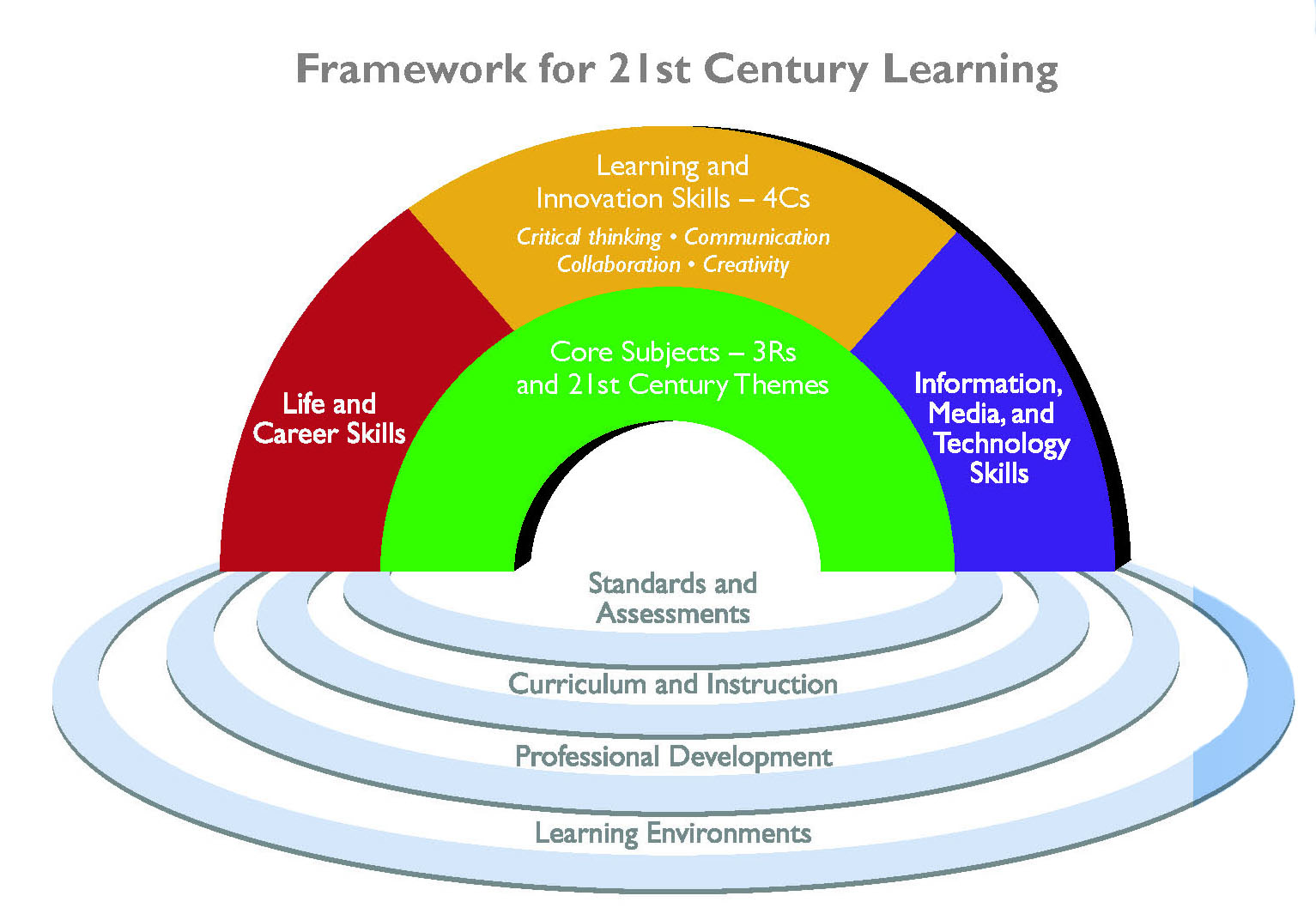
21st century skills
Students should master to
succeed in work and life in the 21st century:
1. Core Subjects and 21st-Century Themes (including English, reading,
or language arts; world languages; arts; mathematics; economics;
science; geography; history; government and civics). It also includes
integrative themes (global awareness; financial, economic, business
and entrepreneurial literacy; civic literacy; health literacy).
2. Learning and Innovation Skills (including creativity and innovation
skills; critical thinking and problem-solving skills; and
communication and collaboration skills).
3. Information, Media, and Technology Skills
4. Life and Career Skills (including flexibility and adaptability; initiative
and self-direction; social and crosscultural skills; productivity and
accountability; leadership and responsibility).
Challenges of Teaching With Technology
Yes, Web 2.0 tools are nearly all free and they are readily accessible
on the Internet. However, that means your students have to have access to
the Internet and your teachers have to know how to make use of these
tools. Many of your teachers and just about all of your students already
know about these tools and use them daily outside of school. But not all
your veteran teachers know about or use Web 2.0, and not all your
students have access to the Internet in their homes. W

No hay comentarios:
Publicar un comentario